Your deposition, explained
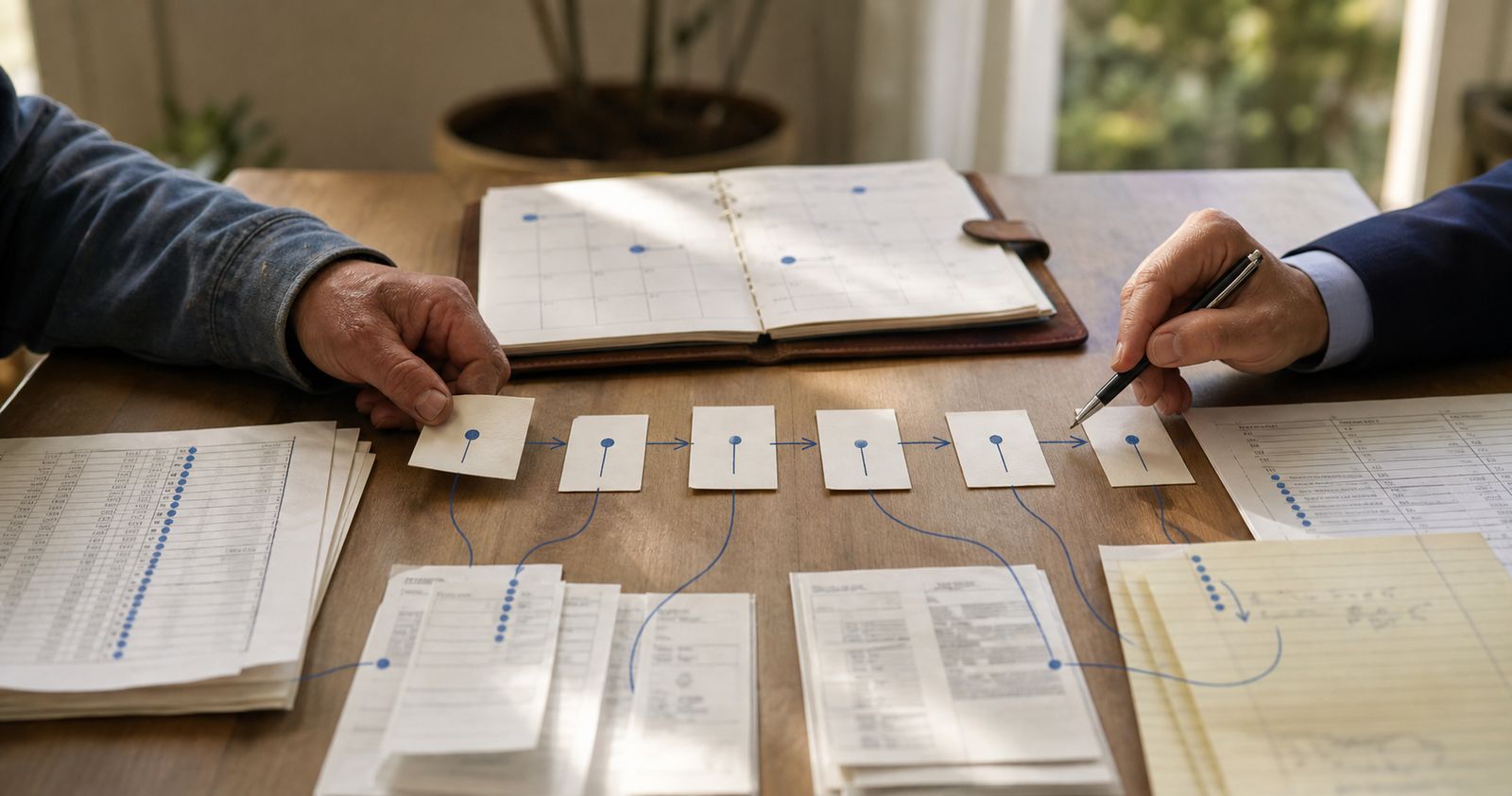
Sworn testimony, in a conference room, with a court reporter and opposing counsel. It sounds worse than it is — if you understand what it is actually for, and follow three rules.
First, three facts. A deposition is testimony under oath, with the same obligation of truth as a courtroom and a transcript that follows the case forever.1 It is not a conversation, a debate, or a test you pass by winning anyone over. And you will not walk in unprepared — we prepare every client thoroughly, in sessions that are privileged, before opposing counsel asks a single question.
1 · What it is and who is in the room
Discovery lets each side question the other’s witnesses under oath before trial. In yours: opposing counsel asking questions, a court reporter taking down every word, your lawyer beside you, sometimes a videographer. It is generally capped at seven hours of testimony.2 The other side’s goals are to learn your story, to lock it in so it cannot move later, and to take your measure as a witness. Your goal is narrower than people expect: answer truthfully, accurately, and no more.
2 · The three rules
Listen to the whole question. Not the question you expect — the one actually asked. Let it finish. Pause before answering; the transcript does not record silence, and the pause gives your lawyer time to object.
Answer the question asked — then stop. “Yes.” “No.” “I don’t know.” “Not that I recall.” Complete answers, not narrations. Volunteering is how afternoon three of a deposition gets scheduled: every extra sentence is a new hallway for opposing counsel to walk down. This is the hardest rule for honest, helpful people, which is why we practice it.
Never guess. “I don’t know” and “I don’t recall” are truthful, complete answers when they are true — and they are different answers; use the right one. Do not estimate dates, distances, dollar figures, or conversations you half-remember. If a document would tell you, say so and ask to see it.
3 · The furniture of the day
Objections. Your lawyer will sometimes object “to the form.” With few exceptions — privilege chief among them — you still answer after the objection; it is preserved for later. If we instruct you not to answer, stop entirely.
Documents. You will be handed exhibits. Read them — actually read them, at your own pace, however long it takes. The silence is not awkward; it is the job. Never characterize a document you have not just reviewed.
Breaks. You may ask for one at any reasonable point — not while a question is pending. Take them. Fatigue is a strategy some examiners rely on; breaks are the counter.
The traps, named. Compound questions (“and then you were angry when you sent it?”) — ask to have them split. Summaries (“so what you’re saying is…”) — if it is not exactly what you said, say so. Absolutes (“you always… you never…”) — almost nothing is always. Friendliness — the examiner’s warmth is real technique; stay courteous and stay careful, including in the hallway and the elevator, where nothing is off the record in any way that matters.
4 · Afterward
You will have the chance to review the transcript and correct errors — though substantive changes are themselves fair game at trial, which is one more reason accuracy on the day beats repair afterward.3 Then the transcript takes its place in the case: quoted in motions, read at trial, compared against every later statement. A deposition well given is one of the most valuable assets your case can hold — not because it was clever, but because it was consistent, calm, and true.
One reframe to carry into the room: you are not there to persuade anyone of anything. Persuasion is our job, later, in writing and at trial — built on the record you are about to give accurately. Witnesses who try to win their depositions lose them. Witnesses who simply tell the truth, tightly, are unbeatable.
Notes
- Code Civ. Proc. §2025.010 et seq.
- Code Civ. Proc. §2025.290 (subject to exceptions).
- Code Civ. Proc. §2025.520.
Related writing: What happens after you hire us · Your personnel file: you have a right to it
This article states California law as of its revision date and is analysis, not legal advice. Reading this site does not create an attorney-client relationship. Attorney advertising.