The field guide: agricultural workers
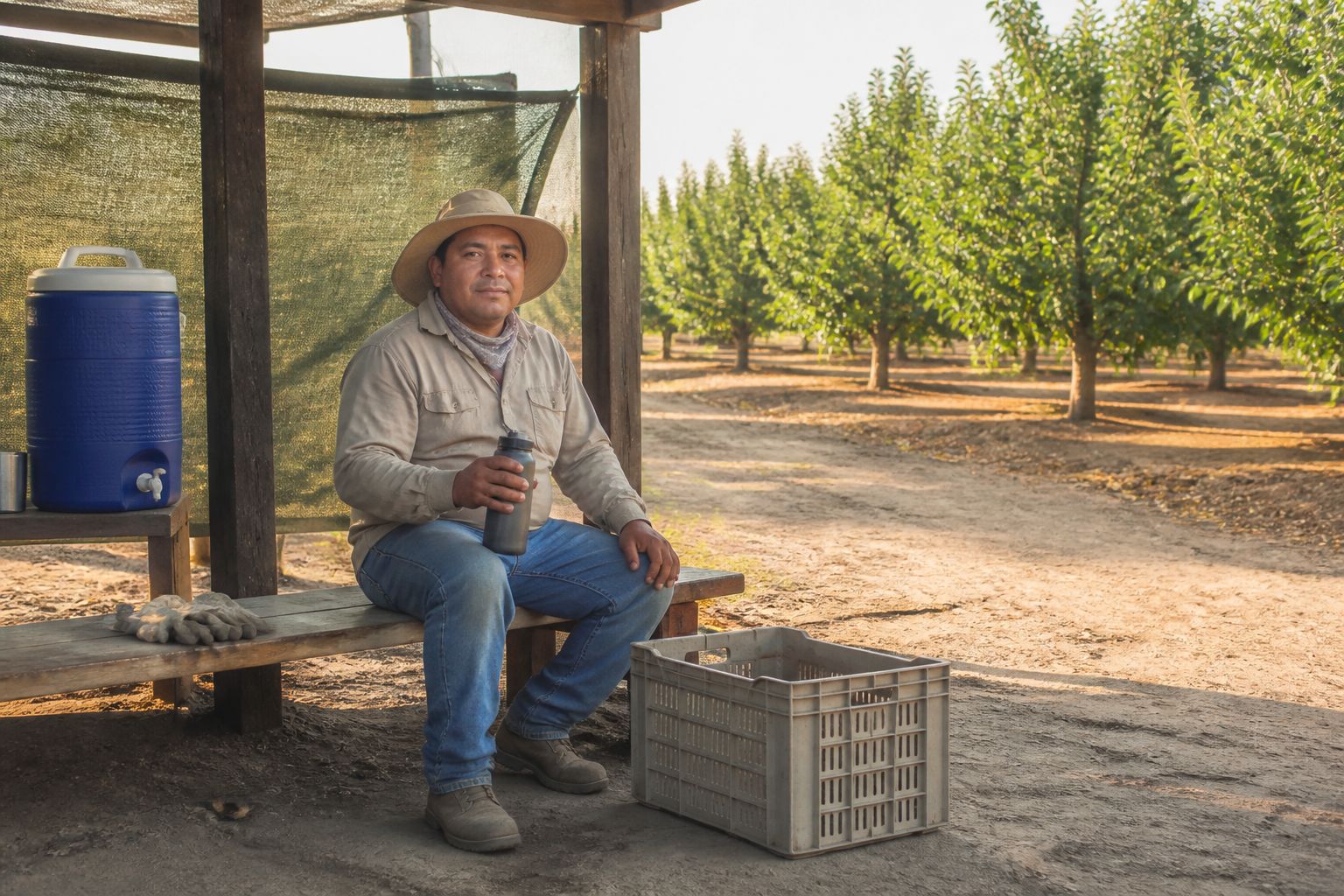
California ended agriculture’s overtime exemption, wrote the nation’s strongest heat rules, and put labor contractors and growers on the hook together. The fields have law now — this is it, plainly.
1 · Overtime came to the fields
For most of a century, farmworkers were carved out of overtime. California ended that: the phase-in legislation brought agricultural workers to the same eight-hour day and forty-hour week as everyone else, with daily double-time past twelve — fully phased in for large employers and, by now, for small ones as well.1 The practical problem is no longer the law; it is payroll systems and habits built in the exemption era. Ten-hour harvest days at straight time are not tradition. They are two unpaid overtime hours, per worker, per day, and they compound exactly as our wage-cluster pieces describe — with piece-rate work adding its own requirement of separately paid rest and recovery time.2
2 · Heat is a legal standard, not a weather report
Cal/OSHA’s outdoor heat rules are specific and enforceable: fresh water as close as practicable, shade at request and mandatory above trigger temperatures, cool-down rest periods on request that count as paid time, high-heat procedures above the higher trigger, and training in a language workers understand.3 A cool-down rest denied is treated like a rest period denied — premium pay follows — and complaining about heat conditions is protected safety activity under the Labor Code’s anti-retaliation provisions. The foreman’s “back to work” during a cool-down request is not management. It is a citation with dialogue.
3 · The contractor and the grower, together
The industry runs on farm labor contractors, and the seam between contractor and grower is where wages disappear. California closes it twice over: client businesses share statutory liability for labor-contractor workers’ wages, and the agricultural setting has its own long-standing joint-responsibility rules. The names on the bus, the crew sheet, and the field’s gate all matter — record them. When pay goes wrong, the strong case names the grower alongside the contractor, and the law supports the caption.
4 · Patterns to examine
Straight-time “day rates” spanning ten and twelve hours. Piece rates with no rest-time line — an automatic failure under the annotated-stub test. Water and shade that exist at the truck, a quarter mile from the row. Tools and required equipment charged against pay. Retaliation by roster: the complainer who is simply not picked up the next morning — which is a termination, however informal the transport made it look. And everywhere, the assumption that immigration status silences people; as our Spanish cornerstone says plainly, the protections do not depend on papers, and immigration threats made to suppress claims are themselves unlawful.
5 · Your paper trail
Daily notes: field, crew, contractor, hours, rows or units, in any notebook. Photograph the crew sheet where possible, and the posted heat plan if one exists. Keep every stub; if there are none, your notebook becomes the payroll record the employer failed to keep — and the law counts that failure against the employer, not against you. Write to us in Spanish or English; bring the notebook. In this industry, the notebook has won cases.
Notes
- Lab. Code §§857–864 (Phase-In Overtime for Agricultural Workers Act of 2016); IWC Wage Order 14.
- Lab. Code §226.2.
- Cal. Code Regs., tit. 8, §3395; Lab. Code §6310 (safety-complaint retaliation).
Related writing: Sus derechos en el trabajo · Two companies, one job · A wage statement, annotated
This article states California law as of its revision date and is analysis, not legal advice. Reading this site does not create an attorney-client relationship. Attorney advertising.