The field guide: home care workers
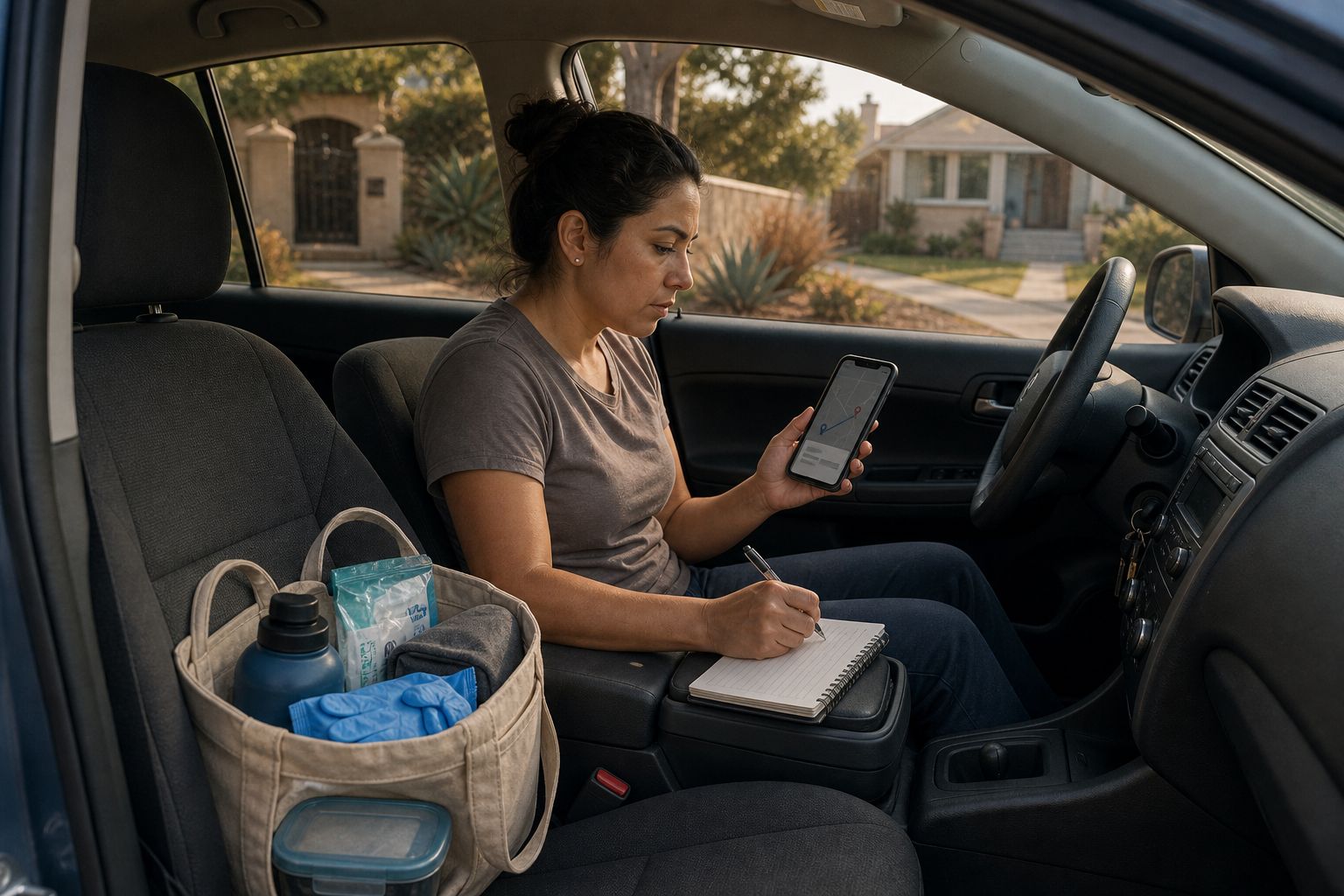
When an agency schedules your day across three clients’ homes, the drive between them is work, the gaps they don’t pay have names, and the 24-hour shift has rules the timesheet was designed to hide.
1 · The agency changes the analysis
Home care through an agency is employment, not gig work — the ABC test forecloses the “independent caregiver” label for the core service an agency sells, and the state layers a licensing scheme over the industry: home care organizations must be licensed, and their aides registered.1 The agency’s paperwork — care plans, schedules, visit verification apps — is a wage record it built itself, and most of the violations in this guide are provable from it alone. Where a client household also directs the work, the joint-employment rules add a second responsible name, exactly as our staffing primer maps.
2 · The day the timesheet doesn’t show
The signature multi-client violation is the seams. Travel between clients during the workday is compensable time — the drive from the morning client to the afternoon client is not your commute; it is the middle of your shift.2 Short gaps the agency schedules between visits, too brief to use for yourself, are generally working time under the control doctrine. The split-shift premium may apply to a qualifying employer-required interruption, depending on the applicable wage order, wages above the minimum, and whether the worker lives at the workplace. And the visit-verification app that clocks you only inside clients’ homes is measuring the agency’s billing, not your workday — the difference between the two is the case.
3 · The 24-hour shift, honestly
Covered personal attendants have a state overtime threshold of nine hours in a day or forty-five in a week; spending more than twenty percent of time on non-attendant duties changes that classification. Federal law also generally requires overtime after forty hours in a workweek for covered agency workers: a third-party employer cannot claim the companionship-services or live-in domestic-service exemptions. Extended and overnight shifts raise the question California answered in Mendiola: controlled overnight time must be evaluated under the wage order governing the job. Mendiola rejected the sleep-time deduction for the security guards before it; it does not create a general right to exclude sleep by agreement. Any exclusion must be authorized by the applicable law and satisfy its conditions, including adequate sleeping facilities and treatment of interruptions.3 A night spent in a recliner responding to a client is not excluded sleep; it is work. The flat “daily rate” for a 24-hour presence is where this industry’s largest underpayments live, and the arithmetic — controlled hours versus paid hours — is the same one our domestic-work guide teaches, at agency scale.
4 · Patterns to examine
Unpaid travel between clients — near-universal. Daily rates absorbing overnight control. An agency using the state’s forty-five-hour personal-attendant threshold to avoid federal overtime after forty hours. A worker incorrectly classified as a personal attendant despite spending more than twenty percent of working time on non-attendant duties. State classification and federal coverage both matter. Visit-app timekeeping that erases the seams. And the retaliation pattern of scheduling: the aide who raised a wage question and watched her client list quietly shrink — hours are the adverse action, and the app logged them.
5 · Your paper trail
Your own day log: first client’s start to last client’s end, with the drives and gaps — the whole day, not the app’s version. Mileage. Schedules and care plans as issued. The daily-rate agreement, if any. Every message about coverage, overnight duties, and interruptions. Then send it to us. The agency’s records prove where you were; your log proves what the day actually was. Between the two sits the unpaid time, and it adds up faster in this industry than in almost any other we serve.
Notes
- Health & Saf. Code §1796.10 et seq. (Home Care Services Consumer Protection Act); Lab. Code §§1450–1454.
- Compensable travel under the control doctrine: Morillion v. Royal Packing Co. (2000) 22 Cal.4th 575, as applied through the wage orders.
- Lab. Code §1454; 29 U.S.C. §207(a); 29 C.F.R. §552.109; Mendiola v. CPS Security Solutions, Inc. (2015) 60 Cal.4th 833.
Related writing: The field guide: domestic workers and caregivers · Two companies, one job · Guía: trabajadores del hogar
This article states California law as of its revision date and is analysis, not legal advice. Reading this site does not create an attorney-client relationship. Attorney advertising.