The field guide: hotel workers
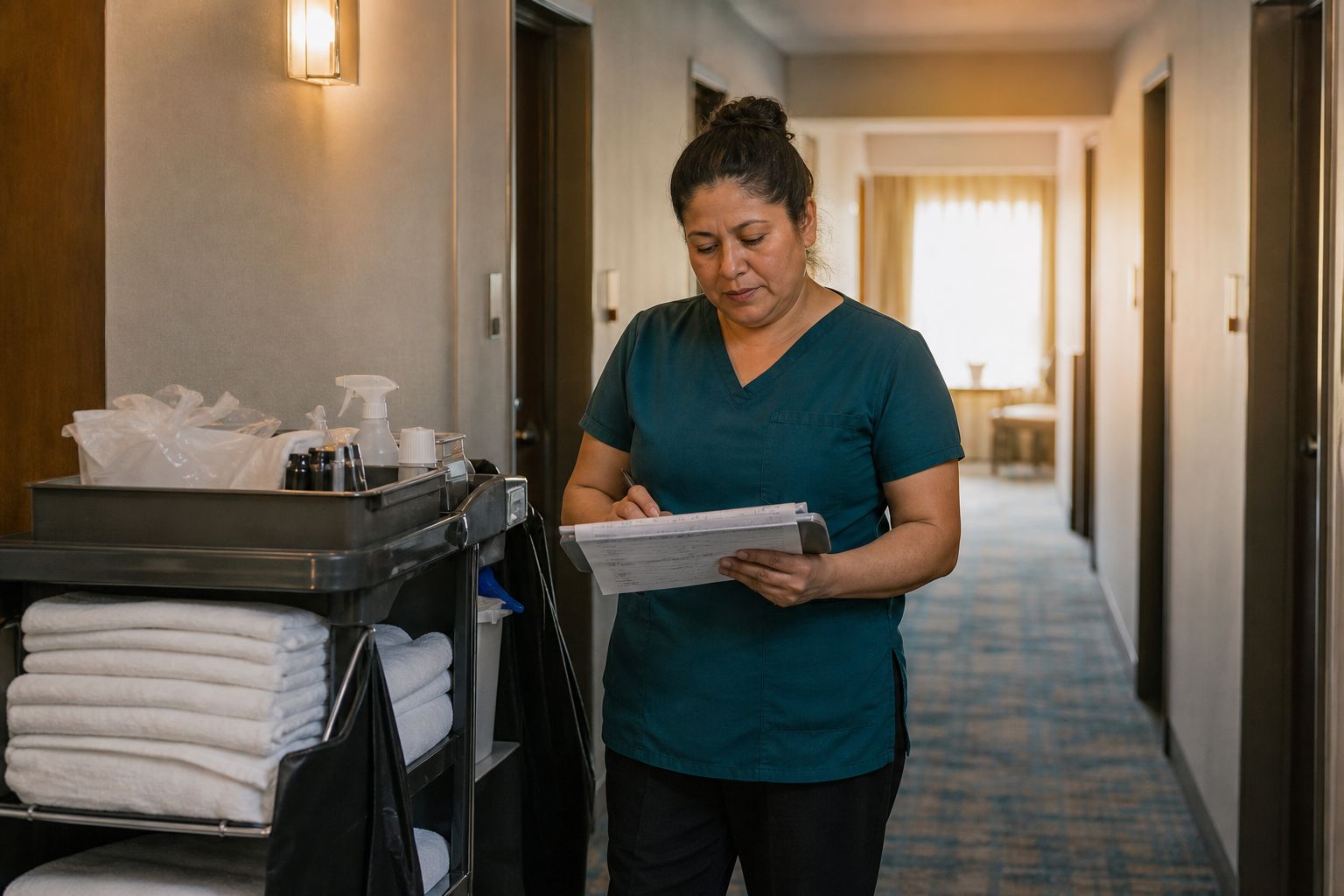
Housekeeping has its own Cal/OSHA standard, several cities wrote hotel-worker ordinances with panic buttons and workload caps, and the service charge on the banquet bill has a legal destination. The lobby’s calm is professionally produced; so are the violations behind it.
1 · The housekeeping standard
Hotel housekeeping is the one job in California with its own injury-prevention regulation: the Cal/OSHA housekeeping standard requires each lodging establishment to maintain a written musculoskeletal injury prevention program, built with housekeeper participation, covering the real hazards of the work — room layouts, tools, workloads — with training in a language workers understand.1 A hotel with no program, or a binder no housekeeper has seen, is out of compliance before the first injury report — and after an injury, that absence reframes everything: the standard exists because the industry’s injury pattern was documented, and juries are permitted to notice.
2 · The city ordinances, where the industry concentrates
In Los Angeles, Long Beach, Santa Monica, Glendale, West Hollywood, and a growing list of hotel cities, local ordinances add a layer the state statutes do not: panic buttons for workers who enter occupied rooms alone; workload limits measured in square feet per shift, with premium pay owed when the cap is exceeded; hotel-specific minimum wages above the state floor; and in several cities, rules directing mandatory service charges to the workers who performed the service. These are enforceable rights with private remedies, not hospitality-brochure promises. If you clean rooms in a covered city, the square footage on your daily sheet is a legal number — and most hotels’ sheets run past it routinely, unpaid.
3 · The service-charge question, again
Hotels are the classic case from our restaurant guide’s warning: the 22% “service charge” on the banquet contract that guests assume is a tip and workers never see. Under state law its destination turns on representations; under several local ordinances, it belongs to the workers by rule. Banquet servers, bell staff, and room service carry this claim more often than any other hotel classification — and the hotel’s own event contracts and folios are the proof.
4 · The layered employer
A hotel is routinely three companies wearing one crest: a brand, an owner, and a management company — plus staffing agencies beneath. Our joint-employment analysis applies at full force, and it matters most in this industry’s signature moments: the “rebranding” where everyone reapplies for their own jobs, the management-company switch that zeroes seniority, the agency housekeepers working beside direct hires at different rates for identical rooms. Name every entity on every document; the crest on the tower is rarely the only defendant.
5 · Your paper trail
The daily room assignment sheets — photograph them; they are the workload record and, in ordinance cities, the premium-pay calculation. Your punches against the rooms actually cleaned. The panic button that exists, or doesn’t — a fact you can document in one sentence with a date. Banquet event orders when your role touches them. And every entity name: brand, owner, manager, agency. Hotels sell the removal of visible effort; the sheets record where the effort went. Keep the sheets, and write to us.
Notes
- Cal. Code Regs., tit. 8, §3345 (Hotel Housekeeping Musculoskeletal Injury Prevention).
- Local hotel-worker protection ordinances (Los Angeles, Long Beach, Santa Monica, Glendale, West Hollywood, among others) — coverage and thresholds vary by city and are tracked per matter.
Related writing: The field guide: restaurant and bar workers · Two companies, one job · Harassment after section 12923
This article states California law as of its revision date and is analysis, not legal advice. Reading this site does not create an attorney-client relationship. Attorney advertising.