The field guide: restaurant and bar workers
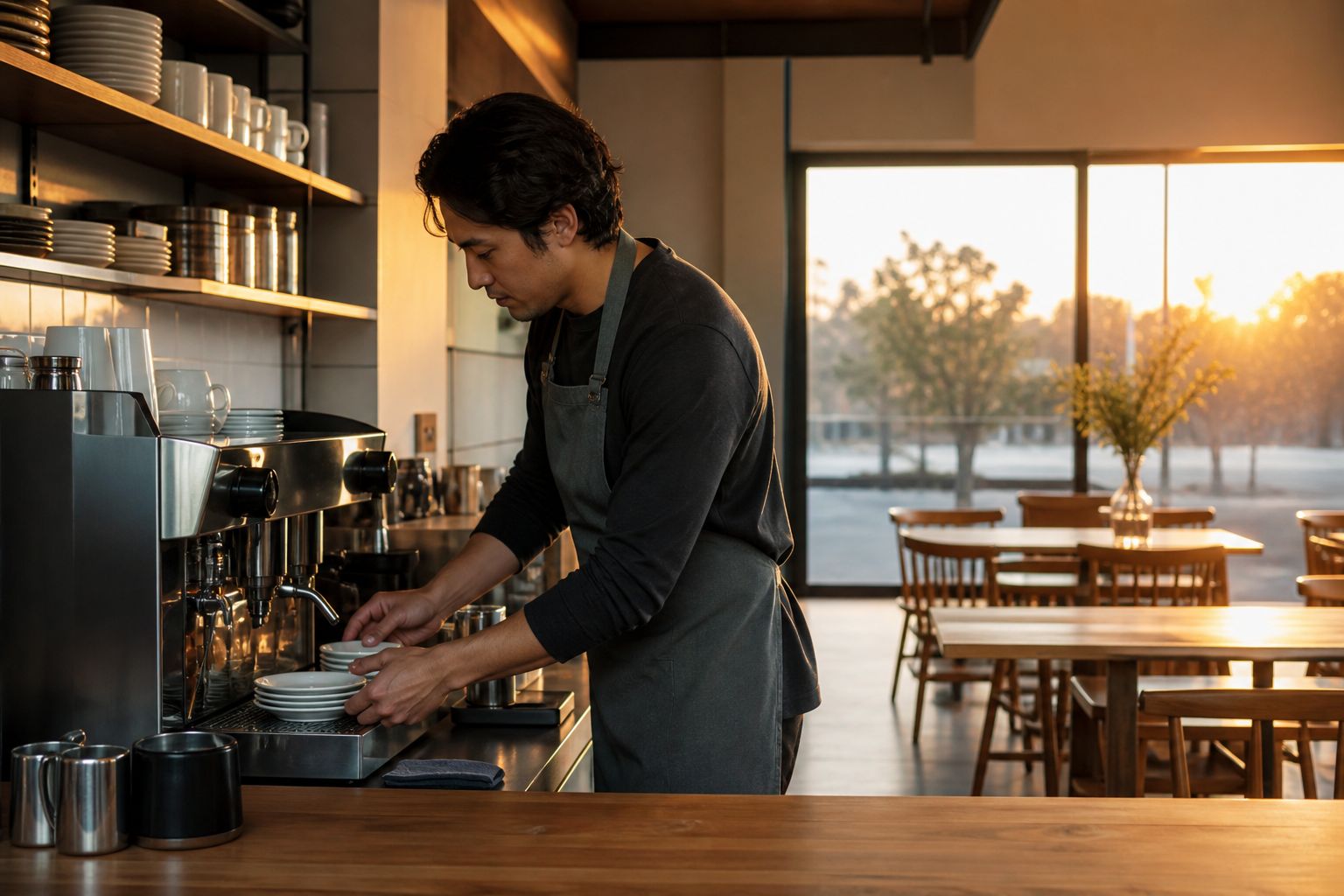
Your tips are yours by statute, your split shift carries a premium, and the uniform is the house’s expense. Restaurant work runs on rules most restaurants never post — this guide is the poster.
1 · The tip rules, which are absolute
Labor Code section 351 makes every gratuity the property of the employees it was left for. California allows no tip credit — tips ride on top of full minimum wage, never against it — and no owner, manager, or supervisor may take a share.1 Card tips are due in full; the processing fee is the house’s cost. Tip pooling among the chain of service — servers, bussers, bartenders — is lawful when it is fair and excludes the people with hiring-and-firing power. The recurring violations are unsubtle: the manager “helping” in the pool, the house percentage, the walkouts and breakage deducted from tips. Each is simply taking your property, with a paper trail in the POS system.
A related boundary worth knowing: a mandatory service charge can constitute a gratuity, depending on the circumstances and representations to customers. O’Grady v. Merchant Exchange Productions, Inc. (2019) 41 Cal.App.5th 771 rejected a categorical rule excluding mandatory charges. Local ordinances can also require distribution to workers. If your banquets carry a charge you never see, keep the customer-facing documents and ask where it goes.
2 · The premiums nobody posts
The industry’s scheduling habits trigger wage-order payments most workers never hear named. The split shift premium: an employer-required split in the same workday can require an additional hour at the applicable minimum wage, reduced by wages already earned above that minimum. Ordinary meal and rest breaks and a break requested for the employee’s convenience do not qualify.2 Reporting time pay: show up for a scheduled shift and get sent home — slow night, cut early before half your shift — and you are owed partial pay anyway. And the meal-and-rest premiums from our general primer apply with special force in an industry where “we’re slammed” is treated as a legal doctrine. It is not. The rush does not repeal section 226.7.
3 · The house’s costs, kept on the house
Distinctive uniforms are provided and maintained at the employer’s expense — if the dress code is more specific than ordinary street clothes, the specificity is the employer’s bill. The knife roll, the wine key, the slip-resistant shoes required by policy: required tools follow the same logic. And the register shortage or dine-and-dash taken from your pay is unlawful deduction in almost every case — losses from simple negligence or third parties are a cost of doing business, not a payroll adjustment.
4 · Patterns to examine
Tip pools with managers in them. Split shifts spanning ten hours with no premium ever paid. “Off the clock” side work — rollups and closing checklists after clock-out, which Troester says cannot be waved off as minutes. Service charges kept silently. Wage statements that fail our annotated-stub test in all four ways at once. None of these requires an unusual case; they require an ordinary case brought by someone who kept their stubs.
5 · Your paper trail
The POS keeps tip records; your stubs must show your rates and hours; your schedule app is a diary of split shifts and cut shifts. Photograph the posted schedule weekly. Keep six months of stubs. Note the pool’s participants by role. Then run the arithmetic from our wage-statement pieces — or send the stack to us and we will. Restaurant cases are won on documents the industry generates automatically; the only missing ingredient is usually a worker who saved them.
Notes
- Lab. Code §§351, 353.
- IWC Wage Order 5, §§4–5 (split shift; reporting time).
Related writing: Meal periods, rest breaks, and the hour of pay most workers never see · A wage statement, annotated · Your last paycheck: the 72-hour rules
This article states California law as of its revision date and is analysis, not legal advice. Reading this site does not create an attorney-client relationship. Attorney advertising.