Wage and hour, in depth
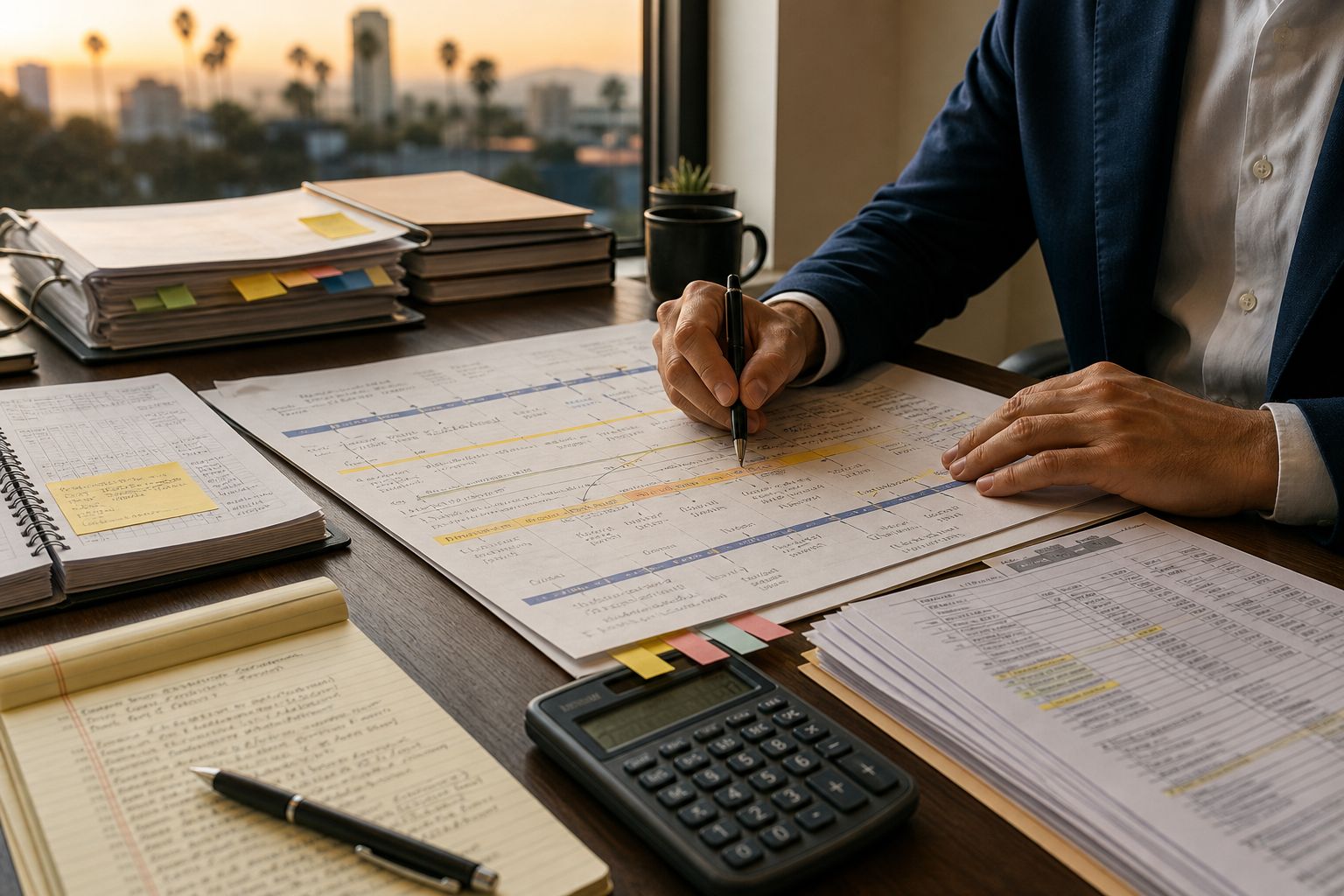
Most wage theft is quiet. It looks like a timekeeping system that rounds in one direction, a bonus that never reaches the overtime rate, a lunch that exists on the schedule and nowhere else. This page explains how California law treats it — and how these cases are actually built.
Rail: Who leads this work — Arthur Karadzhyan: wage-and-hour litigation from both sides of the table — plaintiff-side class actions, and employer-side practice at a national firm. Knowing where employers’ records crack is the method, whichever chair I’m sitting in.
On timing. Wage claims generally reach back three years — four under the Unfair Competition Law. Each pay period that passes falls off the back end. If timing worries you, write now.
1 · What the law says
California wage law is layered: the Labor Code, the Industrial Welfare Commission’s wage orders, and two decades of Supreme Court decisions interpreting both. The layers agree on the essentials. Overtime is owed after eight hours in a day, not just forty in a week. A real, timely, thirty-minute meal period must be provided — and when it is not, the remedy is an additional hour of pay, which the law treats as a wage, not a fine. Necessary work expenses — the phone, the home internet, the miles — must be reimbursed. Wage statements must be accurate and complete. And when employment ends, final pay is due promptly, with penalties running up to thirty days’ wages for an employer that delays.
Two classification questions sit underneath everything. A salary alone makes no one exempt from overtime — exemption turns on duties, and California’s tests are stricter than the federal ones, with a salary floor of twice the state minimum wage for full-time work. And whether a worker is an employee at all is answered by the ABC test: a hiring entity that cannot prove all three prongs has an employee, whatever the contract says.
2 · How these cases actually unfold
They begin with records, because the records already exist: your wage statements, the timekeeping data, the schedules, the handbook, the bonus plan. California gives you a right to your personnel file and pay records on request, and an employer’s own time data is often the case’s best witness. Before demanding anything, the damages model gets built — pay period by pay period, violation by violation, penalties included. A model the defense cannot shake moves numbers further than adjectives ever do.
Then comes the structural decision: an individual case, a class action, or a representative action under PAGA. An individual case is often the visible edge of a policy — the rounding rule, the auto-deducted lunch, the misclassified job title rarely apply to one person. That decision gets made with you, on the records, before filing. Expect the defense playbook: a motion to compel arbitration, a fight over sampling, an early mediation. Most wage cases resolve there — on terms set by how thoroughly the work was done first.
3 · Issues to examine
The regular rate. Overtime is paid on the regular rate, not the hourly rate — nondiscretionary bonuses, commissions, and shift differentials fold in. Models that ignore this understate the claim in nearly every commissioned or bonused workforce.
Premium pay’s knock-on penalties. Since Naranjo, an unpaid meal or rest premium is a wage — so it must appear on the wage statement and be paid at separation, and its absence triggers those statutes’ own penalties. Complaints that stop at the premium leave the derivative claims — often the larger number — unpleaded.
The records presumption. Under Donohue, time records showing missed, short, or late meal periods raise a presumption of violation — the employer’s own clock testifies for the worker. And under Troester, there is no “de minimis” excuse for the few minutes of off-the-clock work that recur every single shift.
The remote-work expense claim. Section 2802 requires reimbursement of a reasonable share of the phone and internet an employer requires people to use — even when the worker would have paid for them anyway. Years into widespread remote work, this claim is still routinely overlooked.
4 · My approach
Every time punch gets read rather than sampled, because the pattern — the lunch clocked at exactly 30.0 minutes every day, the rounding that never rounds up — is the case. The derivative claims are pleaded precisely, in the order the penalties actually cascade. And where the facts support a PAGA action, it gets built the way the reformed statute now demands: standing turns on what my client personally experienced, so the client’s own records become the seed of the representative case, and the 2024 cure-and-cap mechanics punish boilerplate while rewarding exactness.
My experience includes plaintiff-side and employer-side wage-and-hour litigation. That background informs how I test a claim against the records and evaluate the defenses it may face.
What to bring to a first conversation. Your wage statements — six months’ worth is a good start; your schedule or time records if you have them; your offer letter or commission plan; and your own notes, even approximate. Do not worry about completeness. Part of the job is getting the rest, lawfully.
Selected authorities
Lab. Code §§201–203, 226, 226.7, 510, 512, 1194, 1198.5, 2775, 2802 · IWC Wage Orders · Lab. Code §2698 et seq. (PAGA, as amended 2024) · Brinker v. Superior Court (2012) 53 Cal.4th 1004 · Dynamex v. Superior Court (2018) 4 Cal.5th 903 · Troester v. Starbucks (2018) 5 Cal.5th 829 · Donohue v. AMN Services (2021) 11 Cal.5th 58 · Naranjo v. Spectrum Security (2022) 13 Cal.5th 93
If your paycheck has never quite matched your hours, that instinct is worth twenty minutes of an attorney’s time.
This page states California law as of its revision date and is analysis, not legal advice. Reading this site does not create an attorney-client relationship. Attorney advertising.